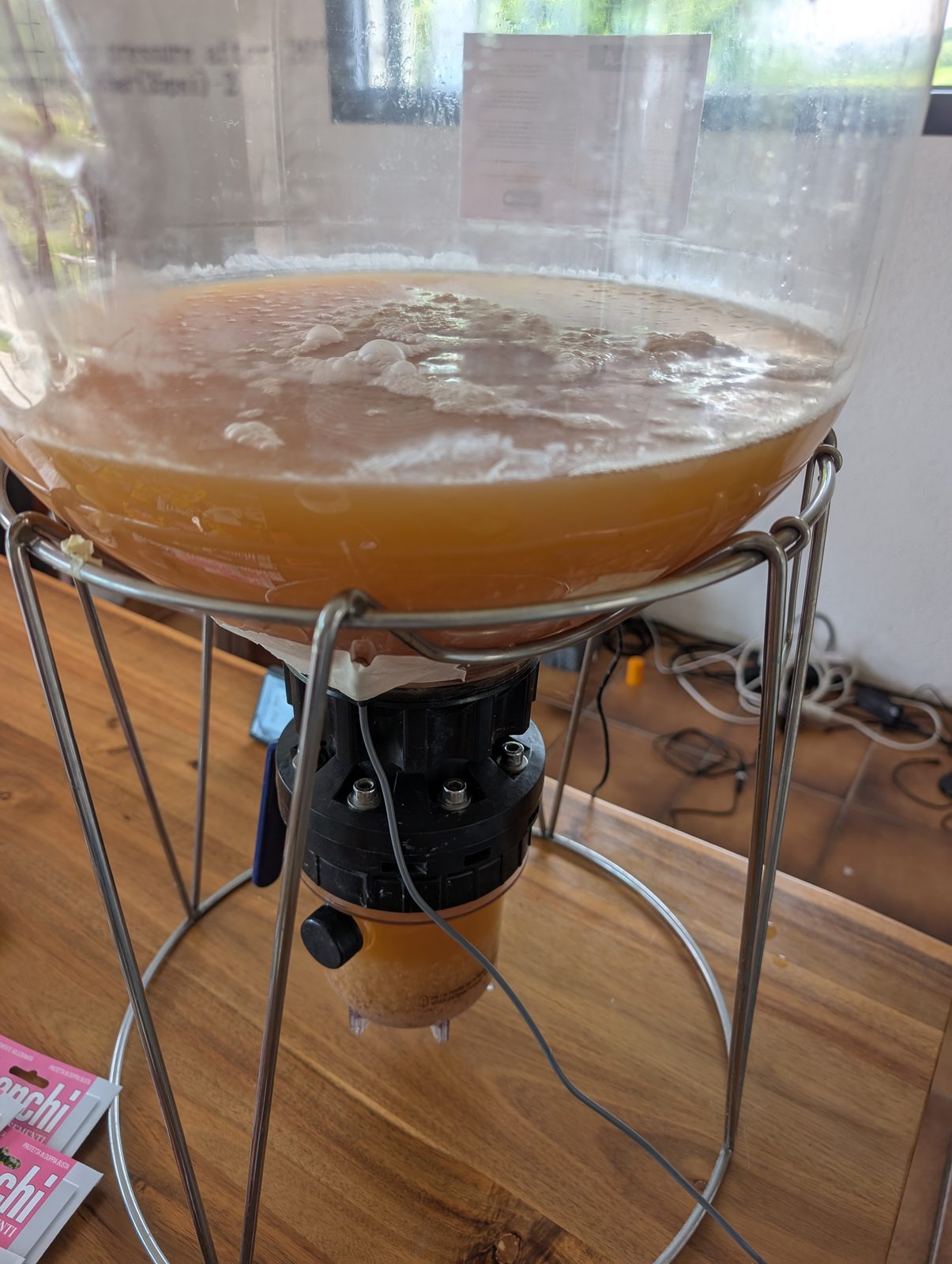
Kombucha too sour? Here's how to fix it
Your kombucha stings your tongue, smells like vinegar, and has lost all its sweetness? Good news: it isn't ruined, and it's almost never unsafe. Sour kombucha simply means the F1 fermented too long or too fast. The bacteria turned nearly all the sugar into acids (mostly acetic acid — the vinegar one).
Here are the five most common causes, then how to rescue the batch you already have.
1. Your F1 runs too long
This is cause #1. The longer the first ferment (the big open jar under a cloth) runs, the more sugar disappears and the more acidity climbs. Past 10-12 days at room temperature, many kombuchas tip into vinegar territory.
The fix: start tasting around day 6-7, then daily. Stop the F1 as soon as it tastes lightly tart but still a little sweet — that's the sweet spot. Depending on the season, it often lands between 7 and 10 days.
2. It's too warm
Heat speeds everything up. At 28-30 °C (peak summer, near a radiator), a kombucha can turn too sour in 5-6 days instead of 10. You think you have time, and you don't.
The fix: aim for 22 to 26 °C. In summer, move the jar out of the hottest rooms and shorten the run: when it's warm, taste earlier.
3. Your SCOBY has grown too big
The SCOBY (the rubbery pancake — the word stands for "symbiotic culture of bacteria and yeast") thickens with every batch. A thick SCOBY relative to the liquid volume means a huge amount of microbes for a small amount of tea: fermentation races and acidity spikes.
The fix: keep a thin pancake (1 to 2 cm) and discard the oldest bottom layers. A younger, smaller SCOBY means a gentler ferment that's easier to catch in time.
4. Not enough sugar (or not enough tea) to start
Sugar is the fuel, tea feeds the culture. Too little sugar and there's none left to balance the acidity at the end. Too weak a tea weakens the culture over time.
The fix: stick to the classic ratio — about 70 g of sugar and 4 to 6 tea bags (or 2 tbsp loose tea) per litre. Don't cut the sugar to "make it healthier": the sugar is what gives you room to maneuver.
5. The starter was too sour, or you brew back-to-back
Every batch starts with a bit of kombucha from the previous one (the "liquid starter"). If that starter was already very vinegary, the new batch gets a head start toward sourness — and the cycle feeds itself.
The fix: use 10 % of the volume as starter (100 ml per litre), taken from a good batch, not from the most acidic dregs. Every so often, restart from a milder base to break the spiral.
What to do with sour kombucha (don't dump it)
An over-soured batch is still very useful:
- Kombucha vinegar: leave it another 1 to 2 weeks and it becomes a homemade vinegar, perfect for dressings.
- Marinades and sauces: swap it in for cider vinegar in a marinade, a salad dressing, a quick pickle.
- Rescue it in F2: bottle it with plenty of sweet fruit juice (30-40 %) and 2-3 days of second ferment. The added sugar softens and masks some of the acidity while adding fizz.
- Cut it: topped with sparkling water or juice at serving time, sour kombucha becomes drinkable again.
The real problem: the sweet spot is a day wide
You've seen it: the difference between perfect kombucha and vinegar is one or two days of F1 and a few degrees. The sweet spot is narrow, and it shifts with the season and the size of your SCOBY. Without noting when you started the F1, at what temperature, and which day it was perfect last time, you're guessing at every batch.
Track your times and temperatures, without thinking about it
That's exactly where FermPal helps: every kombucha moves phase by phase (F1 → F2 → fridge) with its start date, durations, and temperatures. You see at a glance which jar is nearing the sweet spot, and every recipe keeps its version history — so you find again the exact number of days that hit the right balance, batch after batch.
Track my ferments with FermPal (free) →
Go further: the complete water kefir guide (grains, F1, F2) and the fermentation tracker app.